søndag 28. februar 2010

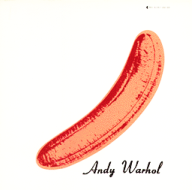
The Velvet Underground - The Velvet Underground & Nico (1967)


Though not my (only) favorite, I consider this to be the album I've heard that is the best, and the most complete. As well as being universally acclaimed and approved of, it's had an incredible impact on music. It, along with their later White Light/White Heat, was important inspirations for the creation and reinvention of many genres, such as punk rock, noise rock, shoegaze and post-rock. The latter might be hard to realize, but "Sunday Morning" is often regarded as the first post-rock song; and though it is an underdeveloped incarnation of the genre, it contains post-rock elements such as the dreamy drones and the classical influence.

The Velvet Underground & Nico wasn't produced by Andy Warhol - as credited - but his managing the band gave them complete creative control, which was important to maintain their experimental nature. As the band's main figures, classically trained John Cale pursued his previous work with Theatre of Eternal Music, including instruments such as the viola and the celesta, while Lou Reed provided elements such as alternate guitar-tunings (for instance he invented the "ostrich guitar," where all the strings are tuned to the same note - included in "Venus In Furs" and "All Tomorrow's Parties") and radical lyrics about drugs and trans-sexuals. Nico provides her beautiful, unique german-american vocals for some songs, but sometime after this album, she was forced out of the band. Her appearance on the album is always debated. My opinion is that she is wonderful and essential.

The album-closener, "European Son," is basically where The Velvets picked up on their second album, White Light/White Heat being their noisiest album and their last with John Cale.

The Velvet Underground & Nico

søndag 21. februar 2010

Broken Social Scene - You Forgot It In People (2002)


Since Broken Social Scene released the amazing "World Sick" from their upcoming Forgiveness Rock Record, I've had my ridicullionth rediscovery of this album.

On You Forgot It In People, Broken Social Scene had gone through some major changes. Since their debut Feel Good Lost, featuring mainly frontmen Kevin Drew and Brendan Canning, for You Forgot It In People, they had gone to harvest their fellow Canadian musician-friends, forming a collective of 10 members - including Leslie Feist and Charles Spearin of Do Make Say Think. 5 additional musicians guest the album. Naturally, this doesn't sound much like the experimental post-rock of Feel Good Lost. The experimentalness is however contained, but this time with pop-songs. And the progression is immense.

You Forgot It In People's status as a classic is perfectly deserved - I'd argue that this is up there among Funeral and In The Aeroplane Over the Sea. It is as good as perfect, not containing a moment of filler from start to end; it is epic, but never tiresome, and it offers a diversity most good albums can dream of, which keeps it interesting at all points. It starts off with the modest "Capture the Flag." The intense combo of "KC Accidental" (the title referencing Charles Spearin and Kevin Drew's former band), "Stars and Sons" and "Almost Crimes" is contrasted by the relaxing "Looks Just Like the Sun," that also keeps the album from getting overwhelming. "Pacific Theme" sounds like a summery landscape, containing some truly awesome production (like the rest of the album, but even more so), then blurring into the fan-favorite "Anthems For a 17-Year-Old Girl," the most obvious pop-song, featuring Emily Haines' vocals on helium. The completely relaxed "Cause = Time" becomes the amazingly creative and catchy mostly-instrumentals "Late Night Bedroom Rock For The Missionaries" and "Shampoo Suicide." "Lover's Spit" is perhaps the biggest fan-favorite, but also the only song on the album I don't really like. "I'm Still Your Fag" features typical Kevin Drew-lyrics, while the outro, "Pitter Patter Goes My Heart," is basically an instrumental version of "17-Year-Old Girl." And by the time of its ending I'm usually stunned, having to sit for some minutes to clear my mind, and to realize what just happened.

You Forgot It In People


This is also the album that launched Arts & Crafts, the canadian label co-founded by Kevin Drew.

torsdag 18. februar 2010

Pavement - Watery, Domestic EP (1992)


Watery, Domestic was released some months after Slanted & Enchanted, Pavement's classic album debut, and marks some changes in line-up. Yet still close to the S&E-sound, Watery, Domestic's sound is more violent and intense, which may be an effect of Mark Ibold and Bob Nastanovich joining the band. Compare it to the later Crooked Rain, Crooked Rain though, and you won't find too many similarities - perhaps except for the spark, and the melody. These are pop songs compared to the majority of S&E (not to mention the earlier Westing-work), and they sound somewhat like a polished version of it.

Definitely some of Pavemen't very best work, many a fan would have this over any Pavement-record (which says a lot a lot). The biggest classics are the first tracks - "Texas Never Whispers" and "Frontwards." "Texas Never Whispers" shows an aggression perhaps never surpassed on a Pavement-recording (arguably though compared to some of the Westing-material). Opening with a distorted shoegaze-riff that soon ceases, Stephen Malkmus sings with a certain disappointment in his voice, and the following solo is the best solo in the world (this is a fact). "Frontwards" is like a beautiful, slowed-down version of the latter. Part 2 is lighter, starting with "Lions (Linden)" with its mesmerizing guitar build-ups, followed by "Shoot the Singer," both sounding naively happy.

[taken down]

I'll have to post the entire Slanted & Enchanted: Luxe & Reduxe sometime in the future, that includes this EP and some 30 additional masterworks. As far as I'm concerned though, Wowee Zowee is the only record by them that surpasses this.

PS: Flytende! Bølge is wounded, and will need your sympathy. Focus your energy on him, so that he can recover faster. His wrist might be broken.

onsdag 17. februar 2010

Wire - Outdoor Miner (1979)


I imagine this has had a large impact on later indie pop and britpop. Wire's 4th single contains "Outdoor Miner" and "Practice Makes Perfect," both taken from their 2nd album. I admire Wire's ability to go from one musical style to another, and still have it sound totally natural (although this is not the best example).

Expect these songs to make a reappearance soon, crammed together with the rest of Chairs Missing.

Outdoor Miner 7"

tirsdag 16. februar 2010

Owen Pallett - Heartland (2010)


Owen Pallett, canadian violinist, pianist and multi-instrumentalist, known for his collaborating with bands like the Arcade Fire, Alex Turner's Last Shadow Puppets, Grizzly Bear, Beirut, Fucked Up, The Hidden Cameras, and the list goes on - but not least for his excellent solo work, previously as Final Fantasy, more recently as Owen Pallett; his He Poos Clouds won the honorable canadian Polaris Music Prize in 2006, and this year he is back with his third album: Heartland.

And what an album. Heartland is basically a concept album, revolving around the imaginary farmer Lewis, in Owen's imaginary land Spectrum, where he himself is god. A short summary: Lewis leaves his wife and his children to devote his life to his god, but when he sees Owen's indifference toward his people and his world, and when he realize he is in fact just Owen's homosexual fantasy, he turns in his faith, climbs Mt. Alpentine, and kills Owen.

The music is beautiful and orchestral, at times pompous and overwhelming - more so than Owen's previous efforts. An interesting element is the increased use of synths and electronics, but then again, it sounds more electronic than it actually is. The music perfectly accompanies the lyrics; "Lewis Takes Off His Shirt" like "Tryst With Mephistopheles" is marching-music, and the short "Mt. Alpentine" is intense like a storm. Not to mention that the lyrics are built like a fairytale, and at times they resemble poems:
"I am overrated," said the sculptress to the sea.
"I've been praised for all the ways the marble leaves the man,
And I was wrong to try and free him."

This man is immensely talented. I won't post Heartland here, but I will post the Lewis Takes Action 7" as a teaser. I expect all of you (my probably 0 readers) to go buy Heartland, or else. (or else you'll miss out on it. and that is too bad.)

Lewis Takes Action

mandag 15. februar 2010

The Yummy Fur - Kinky Cinema (1997)


The Yummy Fur was a scottish indie rock-group active in the 90s. Endlessly underrated, they never gained acclaim, and after keyboarder Mark Gibbons committed suicide in 1999, as well as massive line-up complications, they played their last gig in December, 1999.

I think this might be a compilation of the group's 92-96 recordings - everything before their masterpiece Night Club - but it anyway serves as their second album. Influenced by The Residents and their Commercial Album, as well as The Minutemen, The Yummy Fur would experiment further with short songs. Kinky Cinema is a mesh of 60 songs, lengths ranging from 8 seconds to 3 minutes and recording quality ranging from like-a-crappy-live-tape to fine. The song quality is not steady either, but although it is long between the great songs, it is at all times entertaining. Parodying themselves, Kinky Cinema features several takes on songs from Night Club; "Plastic Cowboy" becomes "Plastic Cowboy (New Wave)" and "I am Cosmetic Man" becomes "I am 'Consumer Man.' " A retake on "Theoretically Pink," "Theoretically Blue" sounds very true to the first version, while "Amphetamine Education Movie" is just a lo-fi version of "Rollerderby." (then again, all these songs may have been recorded before the versions on Night Club - I have no idea). A cover of The Fall's "Fiery Jack" is also included, and doesn't sound very alike the original. The Yummy Fur was often accused of ripping off The Fall; this was perhaps a statement. But the Fall influences is everywhere to be found, also on this album.

Yummy Fur was an art-band (they said so themselves), and heavily influenced with post-punk, their goal was to make something unique. They opposed music that was "fake-serious" - frontman John McKeown criticized bands he met that would be all laughing and joking around, happy people, that onstage would sing about their misery and despair. And so, The Yummy Fur sounded like one big joke. With songtitles like "Yummy Fur vs The Stooges," "Male Slut" and "The Walt Disney Murder Club," their texts were rarely serious, but that also wasn't their intentions. Their music are simple like The Fall's, but lighter, made up of mostly (really) catchy riffs and McKeown's silly vocals. They sometimes sounds like a circus.

John McKeown was a big fan of Alex Kapranos' band at the time, The Karelia, and in the latest line-ups, both him and future Franz Ferdinand drummer Paul Thomson was members of The Yummy Fur. John McKeown are also having success with his new band, 1990s. Yummy Fur got together for a short tour and a compilation-release in 2010, but I haven't heard anything about that - they may still be touring, and I don't think the record has been released yet.

Kinky Cinema

søndag 14. februar 2010

Lizzy Mercier Descloux - Press Color (1979)


In the diverse No Wave-milieu, Lizzy Mercier Descloux managed to stand out as uniquely unique. Grown up in France she dropped out of art school to work in a punk record store, and visiting New York in 1975, she befriended Patti Smith and Richard Hell (of the Voidoids, Television and The Heartbreakers), and immediately found her place in the scene. She started playing with D.J. Barnes in Rosa Yemen, drawing from bands like Mars and DNA, but unique for their frantic guitars, and not least Lizzy's half-hysterical, french-english vocals.

On Press Color, Lizzy's first soloalbum, she would pursue a whole other direction. Half covers (including Arthur Brown's "Fire," Lalo Schifrin's "Mission Impossible" and "Jim On the Move," as well as a version of "Fever" where "fever" is replaced with "tumour"), half original material, Press Color was maybe inspired by James Black and the Whites' mutant disco, but it is far brighter. That is also what makes it so different from other No Wave. Her catchy guitar and upbeat basslines mixed with her smilingly charming french accent versus No Wave's attacking-the-audience aesthetic; but the No Wave influence is still loosely to be found. "Wawa" has that darkness of mutant disco, while "Torso Corso" would perhaps sound like a Teenage Jesus & the Jerks minus the noise and aggressiveness.

"No Golden Throat" is one of the catchiest songs ever.

Described by Richard Hell: "At 17 she was more sophisticated than anyone I'd known"; next she would prove herself by delving into world music, and combining it with her Press Color-sound, her second project would later become the genre-bending Mambo Nassau, that has its similarities to the Talking Heads' takes on world music, but yet is something to itself.

Press Color

Note: this is the 2003 reissue, and contains the 6-track Rosa Yemen EP, as well as a few outtakes, an alternate version of "Mission Impossible" and a collaboration with Patti Smith.

fredag 12. februar 2010

Flying Saucer Attack - Flying Saucer Attack (1993)


Emerging from shoegaze, Flying Saucer Attack were consciously obscure and experimental. Heavily influenced with the DIY aesthetics, they recorded most of their material at home on some sort of stereo system, producing a lo-fi sound that fits the music.

Flying Saucer Attack sounds like an experimental version of Jesus & the Mary Chain's Psychocandy. It has the same noise-pop guitars, it has the accessible hooks, and like on Psychocandy, a lot of the songs resemble each other (though not as excessively). They can be divided into two groups: "Moonset," "Popul Vuh 1" and "Popul Vuh 2" on one side - the latter 2 homaging the krautrock band of the same same - are droning experimentality sounding like I-don't-know-what - indian rituals or something. The 7 remaining songs all draw from the same noise-pop sound. As mentioned, Jesus & the Mary Chain is definitely an inspiration, but there are elements of My Bloody Valentine in there, too; the haze that sounds like the album cover looks, and the transparent vocals could possibly resemble lesser aggressive versions of songs like "I Only Said" and "To Here Knows When."

When I first found this, I thought this sound was something regular in shoegaze. I was amazed by the swirling noise of "Wish" and "Make Me Dream," so I was pretty dissappointed when I realised its uniqueness. Much due to Dave Pearce's wanting to be unknown, and to be highly experimental, they never became known; but many regard this as a shoegaze classic, alongside albums like Chapterhouse's Whirlpool and Ride's Nowhere. Flying Saucer Attack went on to create an album as highly regarded as this. On Further, they experiment with silent noise, and making shoegaze with acoustic guitars, still drawing from the dreaminess and JAMC-influences, but with a new, unique sound.

Flying Saucer Attack can be overwhelming and tiresome; you can be left in awe, but also in exhaustion, or often both. "The Season Is Ours" therefore fits perfectly as a quiet outro, soothing in contrast with every other song on the album, and probably an inspiration for what later became Further.

Flying Saucer Attack

torsdag 11. februar 2010

Glenn Branca - The Ascension (1981)


I thought I perhaps should start out with the album that inspired the name of this blog - Lizzy Mercier Descloux's Press Color - but since I'm in a Glenn Branca-mood, I will start out with this instead.


Glenn Branca, originally having studied theatre in Boston, he moved to New York in 1976, where he soon got involved with the emerging No Wave-scene. Theoretical Girls, his first band, that he co-founded with Jeffrey Lohn of the N. Dodo Band, soon became one of the main forces of the scene; they were the most curious exclusion from Brian Eno's No New York-compilation. Lohn and Branca, being influenced by classical music, they always tried to impose classical elements in their otherwise No Wave noise rock.

Branca later got involved with Rhys Chatham, then the music director of New York's The Kitchen. Chatham recruited Branca as a member of his legendary Guitar Trio, which would inspire him to pursue a whole other direction. Guitar Trio's concept was a play on the aftersound of alt-tuned, layered guitars, which would produce howling sounds that could be mistaken for all kinds of things - many mistook it for a noise-drenched background vocal. Glenn Branca would take that sound, combine it with his noise-classical-concept, and go on to compose what would become Lesson No.1 For the Electric Guitar, released in 1980.

The Ascension, usually considered Branca's masterpiece, continues in the direction of Lesson No.1, combining noise-classical elements with alt. guitar tunings, and layered guitars producing aftersound. It opens with "Lesson No.2"; not really similar to "Lesson No.1," but rather draws from "Dissonance," the other track on the Lesson No.1 EP. It is not harmonic, but noisy. It starts out with a brutal bassriff, then moves on to spurts of metallic noise. "The Spectacular Commodity" picks up where "Lesson No.2" left, but soon moves into a more complex composition. After a while it really takes off, beginning an eternal, mesmerizing crescendo - resembling that of "Lesson No.1" - a crescendo that after several minutes, its ending seems forced, but fitting. I consider the following 3-minute "Structure" as a sort of interlude. It starts pleasantly, in good contrast to the epic of "The Spectacular Commodity," but soon, it, too, transform into noise. Another eternal crescendo, "Light Field (In Consonance)" follows. Drawing similarities to "The Spectacular Commodity," it lacks the noise part, it is more repetetive, and it is generally lighter; it sounds like a light field in consonance. Compared to "The Spectacular Commodity" it is fairly accessible, so it's probably better to compare it to "Lesson No.1." The ending track of this, by now, you-should-expect-this-to-having-reached-its-peak-of-epic album, is the title track, "The Ascension"; "the song that redefined the wall of noise." It is repetitive and noisy and magnificent, with multiple guitars layered to sound like they're some sort of tacky organ, droning its way through its 13 minute tar-like substance, while absorbing your light. When it finishes up, it leaves you empty, amazed.

What I find very inspiring about this album, is how ahead of its time it was. This is basically post-rock, or at least something very related, and it must certainly have been very inspiring for the crescendo-post-rock bands, type Godspeed you! Black Emperor, that emerged some 10-15 years later. I find No Wave endlessly interesting, and I consider Branca to be the most talented musician of the scene. After The Ascension, he moved on to composing contemporary classical music, as a natural progression from "The Ascension." His Symphonies are something completely different than his work with Theoretical Girls, Lesson No.1 and The Ascension, but they still draw from the same influences: noise-classical and guitar aftersound, often including up to 100 guitars. After 29 years of symphonies, however, Branca is releasing The Ascension: The Sequel February 27th. I am very excited, and a bit scared.

Note: the above artwork is not the The Ascension-artwork, but a similar piece by the same artist - Robert Longo.

The Ascension

No Golden Throat

This is my new blog. It is a hobby, and I probably won't update it much. I'm planning to use it to write about and post some of my favorite albums and alike. I will not use ratings, as about everything I'll post will have close-to-full rating, but I will also post some hidden gems. Or I plan to. I hope it will be fun, and I hope eventual readers will approve, and so on.