onsdag 31. mars 2010

Polvo - Today's Active Lifestyles (1993)


Polvo was one of the pioneers of the math rock-genre that emerged alongside post-rock, as both genres were heavily influenced by Slint. What made Slint special, was their 'using rock instrumentation for non-rock purposes' (quoted music journalist Simon Reynolds, that was credited as the 'founder' of the post-rock term), as well as their experimental use of time-signatures and changes in rhythm. The latter influenced math rock.

Today's Active Lifestyles
is Polvo's second album, and it's usually regarded as their best. As it should be, it is fantastically clever, bouncing all over and being highly unpredictable, often changing in rhythm and tempo. Overall, it's quite accessible despite its experimentality, which I've found it shares with a lot of math rock; or perhaps it's just extremely interesting music. I'd describe the sound as something ala Battles meets Dinosaur Jr.

Polvo sounds just like I imagined math rock would sound. If you don't know the genre, this album is an excellent introduction.

Today's Active Lifestyles

mandag 29. mars 2010

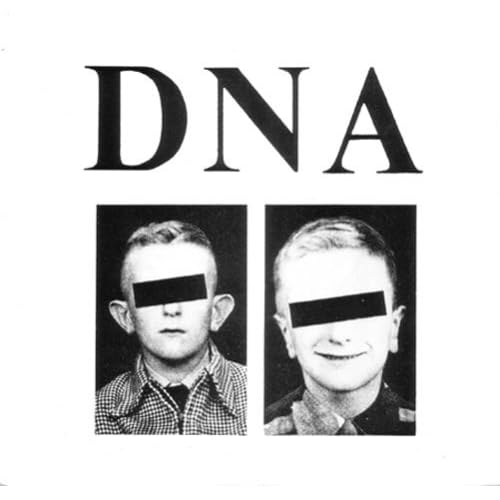
DNA - DNA on DNA


Arto Lindsay of DNA was originally invited to join Mars when they formed, but refused as he wanted to have 'his own band'. After a year or so, DNA was formed. Lindsay recruited performance-artist Robin Crutchfield on bass, and Japanese Ikue Mori on drums. Mori was originally just on vacation, but she became a full-time member. Like her peers, she was a non-musician; but she also couldn't speak english. Within weeks of their formation, they played their first show. DNA was featured on Eno's No New York. Sometime after that, Crutchfield left the band and was replaced by formed Pere Ubu-bassist Tim Wright.

DNA's style is unique. Arto Lindsay's metallic guitar crosses his hysterical squeals and Mori's unstructured drumming. It often sounds chaotic and improvised, but DNA practised their music to perfection, like many other no wave-artists. There's a lot of noise, but beneath that is absolutely genius compositions, complex and clever. It's like experimental pop-songs drenched with metallic noise.

DNA on DNA was released in 2004, compiled with, I think, help from John Zorn. It features their complete released material of 15 songs, as well as 17 songs, some new, some alt-versions, all in one hour.

DNA on DNA

tirsdag 23. mars 2010

Chapterhouse - Whirlpool + Pearl EP (1991)


Chapterhouse formed in 1987, but they spent years before they even put down a demo tape. They would rather focus on their live performances, and to perfection their music before releasing it. In 1990 they released their first several singles and EPs, including Pearl, and in 1991 their debut full-length, Whirlpool. At the time acclaimed but overshadowed, it is now considered a shoegaze classic.

Chapterhouse was originally heavily inspired by Spacemen 3, but with the Pearl EP the My Bloody Valentine-influences was seemingly becoming bigger, and that element only improved with Whirlpool. Initially, however, they were labeled alongside the likes of Spacemen 3, and Spacemen 3 would soon return interest in Chapterhouse. After discovering them in 1988, Sonic Boom was eager to release Chapterhouse-material on his label Bop-a-Sonic. While that never happened, they would eventually sign with Dedicated Records, Spacemen 3's former label.

Whirlpool is upbeat and blissful at one moment, and dark and sluggish at the next. It sounds like a nice mix of Slowdive's ethereal dream pop and My Bloody Valentine's harsh shoegaze, but at times much more pop-oriented than both. "Pearl" is among the catchiest of shoegaze and their biggest, er, 'hit', "Treasure" is repetitive and mesmerising, while "Something More" would be an excellent album closer if it wasn't for the 2 bonus tracks included here. Those 2 bonus tracks - "Mesmerise" and "Precious One" - are however absolutely excellent.

I just realised that the cover is probably a cat. I always thought it looked like a deformed wookie.

Whirlpool
Pearl EP

tirsdag 16. mars 2010

Just Another Asshole: The LP (1981)


Just Another Asshole was a short-lived No Wave-oriented magazine, and with issue 5, they included this compilation. By 1981, the original No Wave-movement had passed, and the everyone-knows-everyone artist-society with it. This record, however, compiles many of the active post-No Wave artists into 77 tracks, each lasting less than a minute. It is highly experimental, and it is far between the gems, but it captures the No Wave-aestethic quite well, and it is indeed an interesting listen. Some known artists make appearances, like Sonic Youth members - short-time Sonic Youth keyboardist Anne DeMarinis contributes my favorite, "Radio Song" - Glenn Branca, Phill Niblock, ZE'V and Rhys Chatham, among others. Some pieces are excerpts from what is probably plays and poems. Some songs are pretty much jokes, like Phill Niblock's "Index Circa Seventy," playing one note for 30 seconds and another for 15. Michael Smith and A. Leroy contributes "The Smith-Leroy Comedy Team," which is a fake excerpt from a stand-up show.

It is chaotic, ridiculous and strange, and a lot of it isn't music. I highly recommend it.

Tracklisting
Just Another Asshole: The LP

torsdag 11. mars 2010

My Bloody Valentine - Isn't Anything (1988), You Made Me Realise (1988)


My Bloody Valentine started out as a post-punk sort of band, but when they'd got to their debut Isn't Anything, their Jesus and the Mary Chain-influences were becoming more prominent. They started experimenting with noise, partially copying JAMC, but differing in many ways; their noise was harsher, and they used vocals as an instrument. The pop element was kept. More importantly, their noise was more distorting and wrapping-you-in than JAMC's background white noise, a sound that would heavily influence the Shoegaze-genre it kickstarted. (allmusic describes it as a 'droning haze'). (NME dubbed the genre Shoegaze due to many of the bands' static stage-performances, looking down, as if they were 'gazing their shoes'. Rather, they were concentrating on pedals, but some did it for image, and the vocalist of Moose taped songtexts to the floor for a while).

You Made Me Realise (picture) was released some months before Isn't Anything, and is their first to clearly illustrate the JAMC-influence.

[taken down]

PS: Flytende Bølge is once again wounded, though much worse this time. His right hand is smashed up, due to some silly not-really-an-accident. So focus your energy and heal him with your spiritual power and whatnot.

fredag 5. mars 2010

Real Estate - Fake Blues 7" (2009)


As far as I've gathered, there's a 'lo-fi beach rock'-scene growing around New Jersey and labels like Not Not Fun and Underwater Peoples Records, spawning great bands and artists such as Ducktails, Best Coast, Julian Lynch and not least, Real Estate. Real Estate is the most polished of the lot, so they've got a lot of attention lately. "Fake Blues" was my first encounter with them, and it's probably still my favorite. A summer anthem, it is also highly playable in the winter, as it (from my experience) will rather get you in a summer-y mood - in fact, that goes for everything I've heard off the scene.

Fake Blues 7"

torsdag 4. mars 2010

Wire - Pink Flag (1977)


Wire

Wire's debut album was released between the death of punk and the birth of post-punk, and it was relevant to both. Opposing punk's incrasingly becoming a parody of itself, Pink Flag combined its raw energy with clever experiments and twists. And consciously diverse, Pink Flag shifts between light and darkness, as well as song lenghts ranging from 30 seconds to 4 minutes, something that also parallells the furiousness of the songs. Lyrics were often randomly generated through games.

PS: this lacks a song.

Pink Flag

onsdag 3. mars 2010

Wire - Chairs Missing (1978)


Emerging from punk, Wire was part of the "art-bands", in opposition to punk's general distaste for "art"; apart from drummer Robert Gotobed, Wire all came with an art-school pedigree. Releasing their debut Pink Flag at the end of the age of punk (if it wasn't already 'dead') - December 1977 - it was also something of a protest to the movement's increasingly becoming a parody of itself. Pink Flag is fast and furious, few songs passing the 2-minute mark. It is brutal and 'punk', but all the same it is clever and original, through its many experiments. In many ways, it marked the beginning of post-punk.

On Chairs Missing, Wire proved themselves unpredictable. (As I said, I am impressed by Wire's ability to naturally progress from one style to another - and that is mainly an album-thing). Consciously, they opposed themselves not to repeat themselves - this was obvious, considering their defining art as something alienating and ever-changing. Songs were lenghtened, and synths was introduced by producer Mike Thorne, that practically became a member of the band. Overall darker than its predecessor, Chairs Missing lacks the brutality of Pink Flag, but is sometimes much more catchy and accessible. This is a post-punk record that would shape a lot of post-punk records to come, and that I suppose (this is just an assumption) have had a huge influence on a lot of modern indie pop. It is a classic.

This version contains some bonus tracks, including what I think is the single-version of "Outdoor Miner" - their biggest "hit" - as well as the great non-album single "A Question of Degree," along with its b-side, "Former Airline."

Chairs Missing

søndag 28. februar 2010

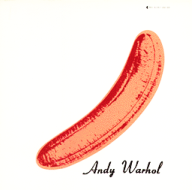
The Velvet Underground - The Velvet Underground & Nico (1967)


Though not my (only) favorite, I consider this to be the album I've heard that is the best, and the most complete. As well as being universally acclaimed and approved of, it's had an incredible impact on music. It, along with their later White Light/White Heat, was important inspirations for the creation and reinvention of many genres, such as punk rock, noise rock, shoegaze and post-rock. The latter might be hard to realize, but "Sunday Morning" is often regarded as the first post-rock song; and though it is an underdeveloped incarnation of the genre, it contains post-rock elements such as the dreamy drones and the classical influence.

The Velvet Underground & Nico wasn't produced by Andy Warhol - as credited - but his managing the band gave them complete creative control, which was important to maintain their experimental nature. As the band's main figures, classically trained John Cale pursued his previous work with Theatre of Eternal Music, including instruments such as the viola and the celesta, while Lou Reed provided elements such as alternate guitar-tunings (for instance he invented the "ostrich guitar," where all the strings are tuned to the same note - included in "Venus In Furs" and "All Tomorrow's Parties") and radical lyrics about drugs and trans-sexuals. Nico provides her beautiful, unique german-american vocals for some songs, but sometime after this album, she was forced out of the band. Her appearance on the album is always debated. My opinion is that she is wonderful and essential.

The album-closener, "European Son," is basically where The Velvets picked up on their second album, White Light/White Heat being their noisiest album and their last with John Cale.

The Velvet Underground & Nico

søndag 21. februar 2010

Broken Social Scene - You Forgot It In People (2002)


Since Broken Social Scene released the amazing "World Sick" from their upcoming Forgiveness Rock Record, I've had my ridicullionth rediscovery of this album.

On You Forgot It In People, Broken Social Scene had gone through some major changes. Since their debut Feel Good Lost, featuring mainly frontmen Kevin Drew and Brendan Canning, for You Forgot It In People, they had gone to harvest their fellow Canadian musician-friends, forming a collective of 10 members - including Leslie Feist and Charles Spearin of Do Make Say Think. 5 additional musicians guest the album. Naturally, this doesn't sound much like the experimental post-rock of Feel Good Lost. The experimentalness is however contained, but this time with pop-songs. And the progression is immense.

You Forgot It In People's status as a classic is perfectly deserved - I'd argue that this is up there among Funeral and In The Aeroplane Over the Sea. It is as good as perfect, not containing a moment of filler from start to end; it is epic, but never tiresome, and it offers a diversity most good albums can dream of, which keeps it interesting at all points. It starts off with the modest "Capture the Flag." The intense combo of "KC Accidental" (the title referencing Charles Spearin and Kevin Drew's former band), "Stars and Sons" and "Almost Crimes" is contrasted by the relaxing "Looks Just Like the Sun," that also keeps the album from getting overwhelming. "Pacific Theme" sounds like a summery landscape, containing some truly awesome production (like the rest of the album, but even more so), then blurring into the fan-favorite "Anthems For a 17-Year-Old Girl," the most obvious pop-song, featuring Emily Haines' vocals on helium. The completely relaxed "Cause = Time" becomes the amazingly creative and catchy mostly-instrumentals "Late Night Bedroom Rock For The Missionaries" and "Shampoo Suicide." "Lover's Spit" is perhaps the biggest fan-favorite, but also the only song on the album I don't really like. "I'm Still Your Fag" features typical Kevin Drew-lyrics, while the outro, "Pitter Patter Goes My Heart," is basically an instrumental version of "17-Year-Old Girl." And by the time of its ending I'm usually stunned, having to sit for some minutes to clear my mind, and to realize what just happened.

You Forgot It In People


This is also the album that launched Arts & Crafts, the canadian label co-founded by Kevin Drew.